
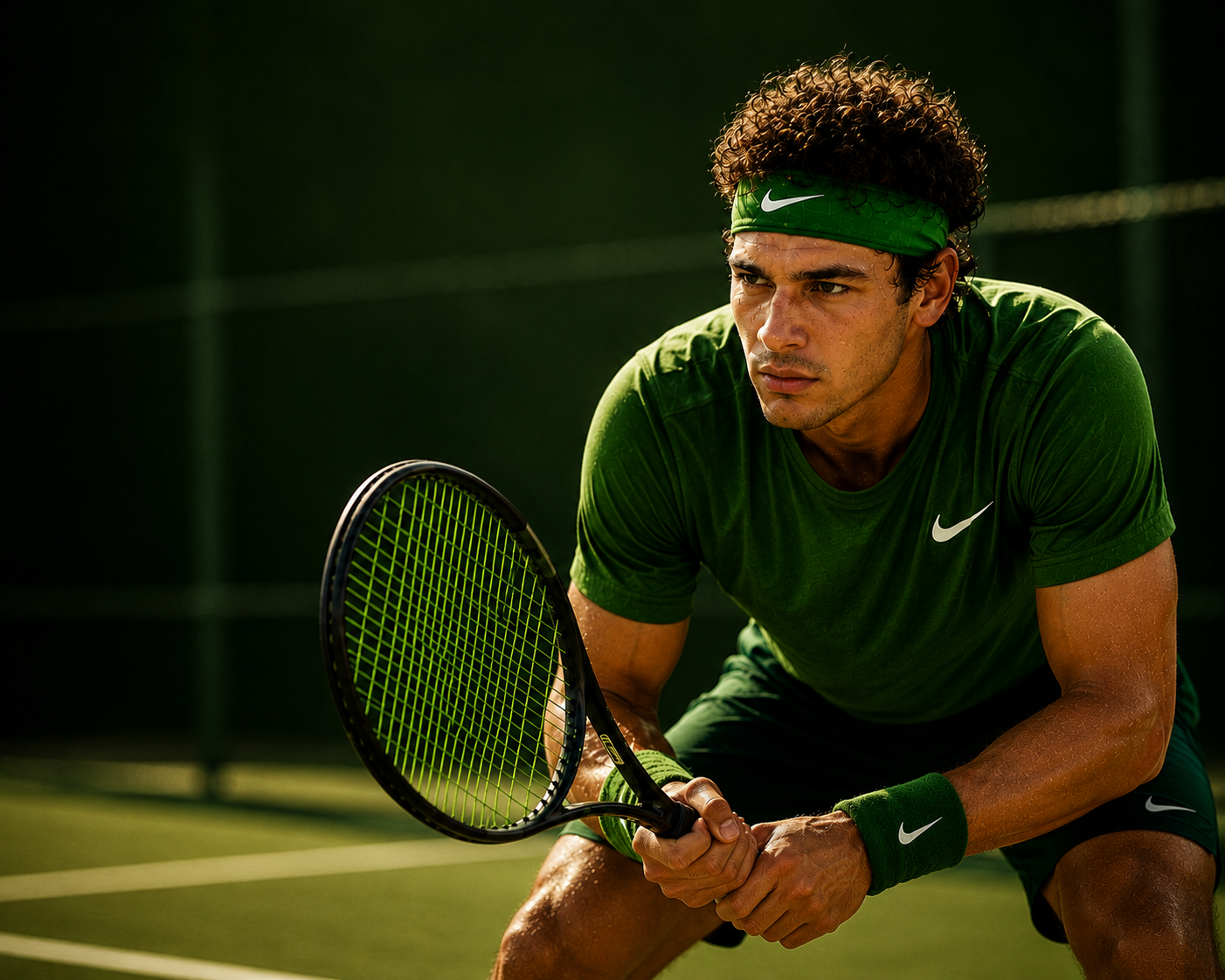
Focused is selective attention under pressure — the ability to remove everything that does not matter in the current point. It is not intensity. It is clarity. Focus is what allows execution to stay stable when emotion rises.
Related States
Locked In · Present · Clear · Dialed · Composed Attention
Common Disruptors
Score-watching · Crowd noise · Opponent antics · Mid-match analysis · Fatigue · Thinking about the finish line
What It Feels Like
Emotionally: Quiet, settled, absorbed. Mentally: One thought at a time, clear target, low mental noise. Physically: Stable breathing, grounded stance, relaxed-but-ready posture. Behaviorally: Consistent routines, minimal hesitation, direct decision-making.
What It Sounds Like in Your Head
"Ball." · "Feet." · "Target."
No commentary. No expansion. Only cues. A focused mind isn't loud about being focused — that's how you know it's real.
What It Looks Like in Tennis
Routines consistent between every point. Eyes returning immediately to ball and target. Distractions ignored naturally, not fought. Decisions simple and direct. The player stays inside the point, not inside the score.
What It Is Trying to Tell You
Focus is clarity under constraint. Attention is disciplined, distractions are being filtered, execution is beating interpretation. Nothing needs to be added. Only maintained.
Most players think focus is something you add — more effort, more concentration, more grit. It's the opposite.
Focus is subtraction. The score, the crowd, the last point, the ranking implications, the opponent's body language — a focused player hasn't conquered these things. They've simply stopped renting them attention.
What's left after the subtraction is small and powerful: the ball, the feet, the target. Execution with nothing in the way.
That's why focus is trainable and "trying harder" isn't. You can't force clarity. You can only remove what's blocking it.
Execution Stabilizer
Focus is what keeps the swing the same at 5–5 as it was at 1–1.
Emotional Firewall
A narrow lens filters emotional interference before it reaches the swing.
Decision Simplifier
One cue produces one decision. Ten inputs produce hesitation.
Rhythm Keeper
Consistent attention builds consistent tempo — between points and inside them.
The Competitive Separator
Under pressure, everyone's ability is present. Only focus determines whose ability shows up.
In Competition — Locked In
- Same routine before every point, win or lose
- Eyes back to the ball before the crowd finishes reacting
- Timing that holds up under pressure
- Simple, direct shot selection
- The score noticed, never inhabited
In Competition — Scattered
- Attention expanding to score, crowd, consequences
- Decisions cluttered by second inputs
- Execution breaking as the lens widens
- Routines drifting when it matters most
Off the Court
- One task at a time instead of five at once
- Practice sessions with a single stated purpose
- Phone down, presence up
- The skill of returning attention — in school, in conversations, in life
⚠ When the Lens Widens
Under pressure, distractions multiply outside and emotion rises inside. If attention expands with them — to score, crowd, consequences — decisions clutter and execution breaks.
The ability never left. The attention did.
✓ When the Lens Holds
Focus stabilizes everything it touches: timing under pressure, decision clarity, rhythm between points, consistency under stress.
The player removes everything except execution — and clarity becomes the competitive separator in every tight match.
Reframe / Mantra
One-Purpose Practices
Every session gets a single stated focus. Training the lens to hold on one thing is the whole skill — the content matters less than the holding.
Distraction Reps
Practice with noise, with people watching, with score pressure invented on purpose. Focus that only exists in silence is decoration.
Train the Return, Not the Hold
Attention will drift — that's human. The skill is how fast it comes back. A few minutes of daily breath work is literally practicing the return: notice the drift, come back to the breath. Same muscle, match day.
Tennis is a distraction machine. Public scoreboard, visible opponent, watching parents, endless time between points to think. The sport is practically designed to widen your lens.
That's why focus is the quietest superpower in the game. It doesn't look like anything from the stands. It just looks like a player whose level never drops.
Focus is not trying harder. It is removing everything unnecessary — and the player who narrows attention expands control of the match.
Barry Buss · 90-second reset talk · Narrowing the lens
Reset talk · Returning to one cue under pressure
They need: silence protected, cues kept short, and nothing added to a lens that's already narrow.
Coach: "One cue." "Stay simple." "Ball first."
Parent: "Keep it simple." "Stay with the point."
Player (self-talk): "Ball." "Feet." "Target."
For parents and coaches: when a player is locked in, the best coaching is often none. Don't widen a lens the player just narrowed.
I can hear everything and listen to nothing.
I can play the biggest point the same as the first."
Flow is sustained focus without effort. The path:
Productive emotions are fuel.
The player who narrows attention expands control of the match.
Narrow. Execute. Repeat. →