
Emotional intelligence — or the lack of it — weaves its way through every corner of society.
Road rage on the highway. Social-media trolling and outbursts. The legendary Karen insisting on seeing the manager. Every day, we watch emotional intelligence in action, or its absence, shape the world around us.
Our tennis world is no exception. Only here, the cameras capture every emotion in front of a worldwide audience of every age and background.
Every Monday, this column will look at stories from the professional tours through the lens of emotional intelligence. Beneath the results and headlines, a deeper, more meaningful story is always unfolding.
This week brings three stories worth your attention.
Novak Djokovic — Proving Them Wrong
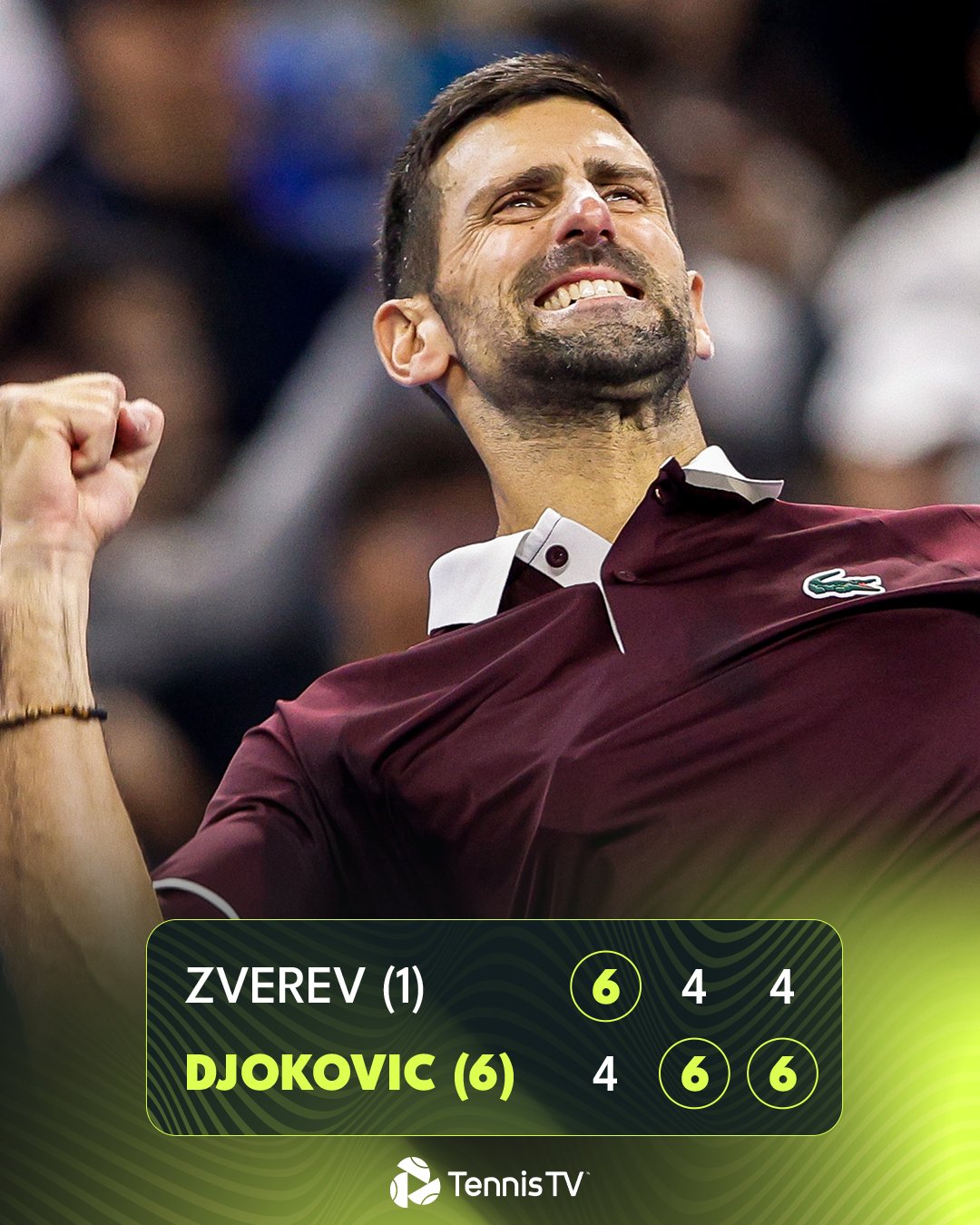
At 39, Novak Djokovic is the last of the Big Four still standing. The tennis media has been writing him off for longer than some players' careers have lasted. Health, injuries and Father Time are all conspiring against the most accomplished player our sport has seen. And yet, in Beijing, he is center stage once again.
Back in Beijing after eleven years away, he lost the first set to local favorite Bu Yunchaokete and came close to losing the match, looking every bit his age. Then on Sunday, after dropping the opening set to top seed Alexander Zverev — this year's French Open and US Open champion — he dug in, found another gear, and ground out a brutal three-set win.
He is now 32–0 in Beijing — the best start any man has made at a single event in the Open Era, one better than Rafael Nadal's 31–0 at Roland Garros. More on Rafa below.
Djokovic has spent two years being told he's finished. In January, after beating Jannik Sinner in a five-set Australian Open semifinal, he went straight at it: “I want to thank them all, because they gave me strength.”
Which raises a universal question about emotional intelligence.
When someone doubts you — and that includes doubting yourself — what happens inside you?
Does it destabilize you? Motivate you? Anger you? Focus you?
In August, Djokovic left Arthur Ashe in tears after a first-round loss at the US Open, his earliest Grand Slam exit in twenty years. Five weeks later, here he is.
The emotion itself is not the obstacle. The real skill lies in knowing how to channel it.
Then came a deeply human moment. The Beijing crowd cheered for him over their own player, and the man who has faced jeers throughout his career admitted he had to pinch himself.
You can't control what others say about your game. Frankly, what other people think of you is none of your business. But you can choose whether to co-sign their words and let them drain you, or pin them to the bulletin board and let them fuel your fire.
Djokovic is a master at finding motivation where you'd least expect it — and he did it again in Beijing, against the hottest player on the ATP Tour.
Emma Navarro — Choosing Health Over the Game
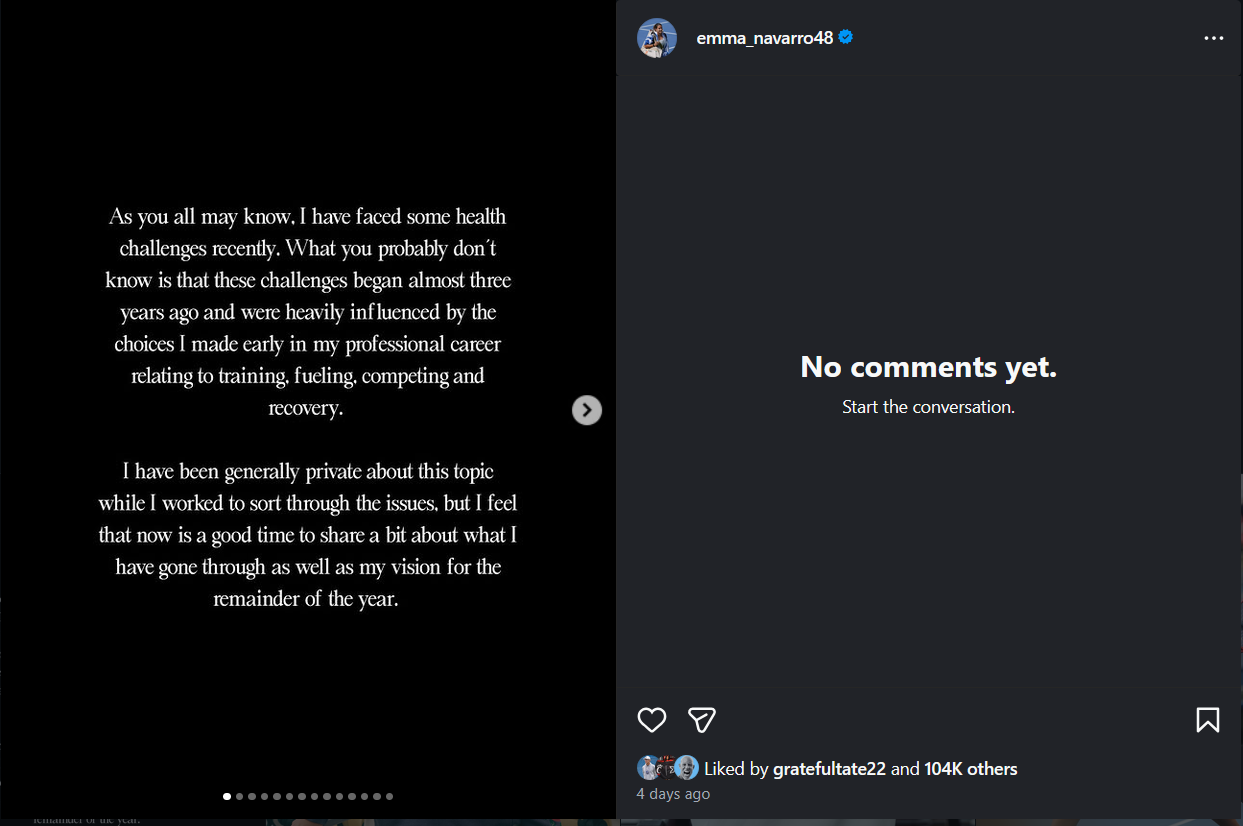
Just two years ago, Emma Navarro was ranked No. 8 in the world and rising, competing week in and week out with the best women's players on Earth. Then something changed, and for a long time nobody, including her, knew what. This week, in a remarkably honest Instagram post, she explained it.
For close to three years, she had been living with RED-S — Relative Energy Deficiency in Sport — and Hashimoto's hypothyroidism, without knowing it. She kept competing through fatigue, dizziness and headaches. But what she described first wasn't the physical symptoms. It was the emotions. Irritability. Frustration. Perfectionism. Worry. And anger, which she said was completely unlike her. “Everything began to annoy me.”
As most young athletes do, she overlooked the warning signs, driven by her emerging success and a competitive nature that pushed her to the edge. Eventually it caught up with her: nine losses in her first thirteen matches this year, and a withdrawal in Charleston.
Recovery has meant fueling her body properly again, and she addressed the visible change head-on: “So yeah, I gained some weight this year.” Now, as she steps away to recover, aiming to be back for the Australian Open in January, she calls it a worthwhile trade: “I gained my life back.”
That is self-awareness at its most demanding. It isn't just noticing anger on court — anyone can do that — but realizing the anger is not who you are, and asking what message it carries. Emotions, on many levels, are signals: information that something meaningful is out of balance. Navarro's emotional swings warned her something was wrong long before any test could.
Sometimes emotional intelligence isn't about pushing harder to break through whatever resistance you're feeling. It's about knowing when to pause — listening to your body, understanding what your life truly needs, and finding the courage to play the long game, even when it costs you in the short term.
That is a different kind of strength. And then came the bravest act of all: she shared her story with everyone, so that her struggles could inform and inspire others who feel the same.
When your emotions start to feel foreign and out of sorts, don't just battle them on court. Listen to what they're telling you, and reach out to someone you trust for the help you may need.
Rafael Nadal — When Winning Isn't the Point

On Saturday, Rafa Nadal picked up a racket in front of a crowd for the first time since he retired in November 2024. The occasion was the tenth birthday of his academy in Mallorca.
No ranking points. No prize money. No GOAT debate. No injuries to manage.
He brought the friends and rivals who shaped his career — Carlos Moyà, David Ferrer and Richard Gasquet on his side; Andy Murray, Marat Safin, Dominic Thiem and Fabio Fognini on the other. Fifteen hundred people got in by lottery, and the academy set aside tickets for its own staff. Naturally, Team Rafa won 4–3 — rule number one of exhibition tennis is to send the fans home happy — with Nadal and Moyà taking the deciding point against Murray and Fognini.
Rafa prepared as he always does, as if it were a Grand Slam. That is who he is.
But consider what the day really was: a 40-year-old champion returning to the place that shaped him, surrounded by those who challenged him, in front of the people who keep his academy thriving. For most of Nadal's life, tennis was an obsession — the next match, the next title. Now the same sport that nearly destroyed his body holds new meaning: gratitude, connection, legacy and giving back.
That is emotional intelligence in action. That is a healthy relationship with a sport that can be cruel and unforgiving to so many.
Three players. Three journeys through very different emotional landscapes.
Djokovic: What do you do with doubt?
Navarro: What do you do when your body tells you something has to change?
Nadal: What does tennis mean when winning is no longer the point?
This Week in EQ
Runs every Monday on First Ball To Last
The full platform — daily emotional intelligence training for players, parents and coaches — goes live on November 2. November's theme is self-awareness.
Hope to see you soon.